
Media Coverage


April 28, 2026
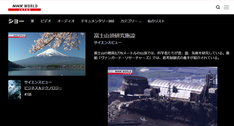
At Mt. Fuji's 3,776-meter summit, scientists study clouds, lightning, and climate. Vanguard Researchers features a mind-controlled prosthetic arm. Watch Now >

NHK World
August 28, 2024
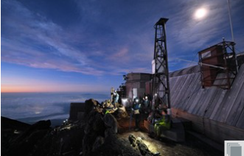
In late July, as climbers celebrated their successful ascents to the summit of Mount Fuji, researchers wearing helmets and safety harnesses were climbing onto the roof of a nearby research facility on Japan's highest peak. Read more >

The Mainichi
Dec. 5, 2023
20 Things That Happened for the First Time in 2023
- Microplastics in Clouds: Japanese researchers discovered microplastics in clouds at high altitudes.
In 2023, several events occurred for the first time, marking significant milestones across various fields. These include India's successful lunar landing, a paralyzed man walking again with brain-computer interface, and the first Arab woman in space.

The New York Times

Oct. 9, 2023
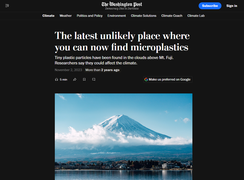
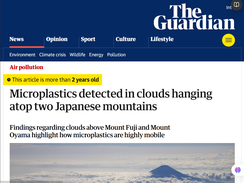
Findings regarding clouds above Mount Fuji and Mount Oyama highlight how microplastics are highly mobile
Microplastics have been found everywhere from the oceans’ depths to the Antarctic ice, and now new research has detected it in an alarming new location – clouds hanging atop two Japanese mountains. Read more >

The Guardian
Oct. 1, 2023
When it rains, it pours … microplastics, that is.
Researchers in Japan have discovered nine kinds of polymers and one rubber floating among the clouds — a worrying sign for the climate.
Intrepid teams of scientists climbed Mount Fuji and Mount Oyama to collect water from the foggy mist that veils the mountain tops. Read more >

New York Post
Sep. 27, 2023
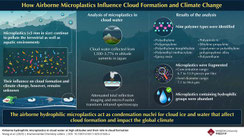
Plastic particles less than 5 mm in size are called “microplastics.” These tiny bits of plastic are often found in industrial effluents, or form from the degradation of bulkier plastic waste. Research shows that large amounts of microplastics are ingested or inhaled by humans and animals alike and have been detected in multiple organs such as lung, heart, blood, placenta, and feces. Read more >

EurekAlert!
Mar 20, 2020
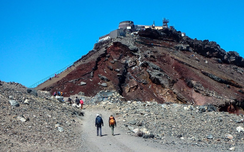
The Mount Fuji Weather Station on the Kengamine ridge on the summit of Mount Fuji was closed in 2004 after 72 years of continuously manned weather observation. Since then, the nonprofit Mount Fuji Research Station has leased the facility for research use during two summer months each year. Mount Fuji’s height and unique isolation from other mountains has made it an ideal location for a range of important environmental research.

Nippon.com
January 1, 2018
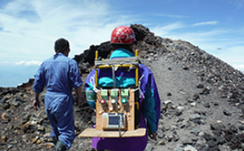
Superseded by weather satellites and temporarily left unmanned, Mount Fuji Weather Station is back in operation as a non-profit organization (NPO), attracting researchers every summer from Japan and overseas. Read more >

Highlighting Japan